
We used to be sure that we were not sure, we guessed and were sure it was a guess. Someone told us a fact, but we didn't take it for granted as the truth, there was always room for doubt, and we expected to prove wrong.
A good morning does not need a perfect plan. Sometimes it begins with one small pause, a warm drink, and a notebook opened to a clean page. This sample article mixes everyday observations with deliberately varied formatting, so an editor has something interesting to handle.
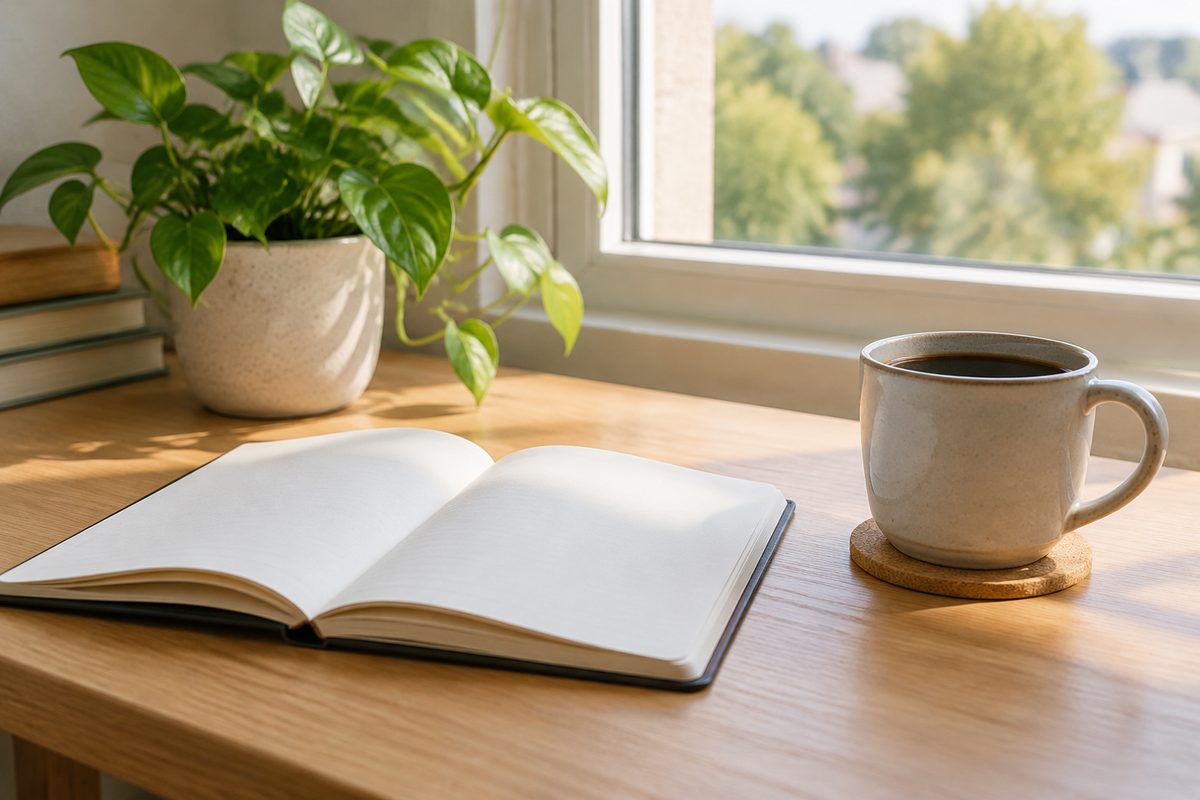
Figure 1. A coffee cup, an open notebook, and a small plant on a desk.

Start with what is already there
Before adding another task, look at the space around you. Clear a
little room, move your phone aside, and write down a single intention. Try keeping it simple rather than doing everything at once. Even a note labeled morning-notes can be enough to get started.
- -
- yuuii
- uiiuy
- yuuii
The routine is intentionally flexible: notice one thing, choose one action, and then begin. There is no score to keep and no special equipment to buy. For extra formatting coverage, this sentence includes H2O, a reference marker1, and an example hyperlink.
- Put your drink and notebook within reach.
- Write one sentence about how you want to begin.
- Choose a small next step and take it.
| Element | Example |
| Focus | One small task |
| Pace | Unhurried |
Keep the useful part
By the end of the morning, the desk may be untidy again and the plan may have changed. That is fine. Keep whatever made the start feel easier, leave the rest behind, and return to the page tomorrow. A routine should support the day, not become another thing to finish.
Making room for a quieter start
A good morning does not need a perfect plan. Sometimes it begins with one small pause, a warm drink, and a notebook opened to a clean page. This sample article mixes everyday observations with deliberately varied formatting so an editor has something interesting to handle.
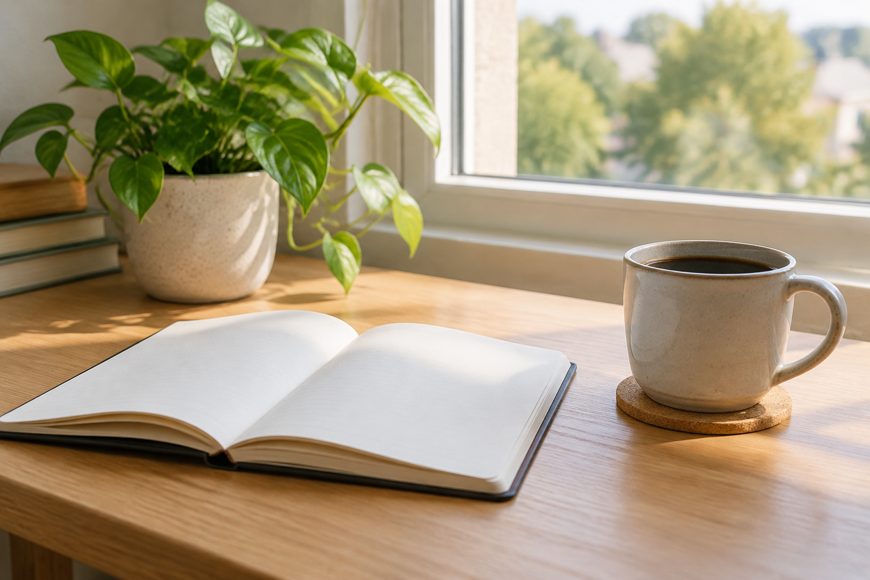
Figure 1. A coffee cup, an open notebook, and a small plant on a desk.
Making room for a quieter start
A good morning does not need a perfect plan. Sometimes it begins with one small pause, a warm drink, and a notebook opened to a clean page. This sample article mixes everyday observations with deliberately varied formatting so an editor has something interesting to handle.
Figure 1. A coffee cup, an open notebook, and a small plant on a desk.
Start with what is already there
Before adding another task, look at the space around you. Clear a little room, move your phone aside, and write down a single intention. Try keeping it simple rather than doing everything at once. Even a note labeled morning-notes can be enough to get started.
- A notebook or a loose sheet of paper
- A drink you enjoy
- Tea, coffee, or water
- A few minutes without notifications
“Leave a little space in the day for something you did not plan.”
Making room for a quieter start
A good morning does not need a perfect plan. Sometimes it begins with one small pause, a warm drink, and a notebook opened to a clean page. This sample article mixes everyday observations with deliberately varied formatting so an editor has something interesting to handle.
Start with what is already there
Before adding another task, look at the space around you. Clear a little room, move your phone aside, and write down a single intention. Try keeping it simple rather than doing everything at once. Even a note labeled morning-notes can be enough to get started.
- A notebook or a loose sheet of paper
- A drink you enjoy
- Tea, coffee, or water
- A few minutes without notifications
“Leave a little space in the day for something you did not plan.”
A tiny routine to try
The routine is intentionally flexible: notice one thing, choose one action, and then begin. There is no score to keep and no special equipment to buy. For extra formatting coverage, this sentence includes H2O, a reference marker1, and an ex
- Put your drink and notebook within reach.
- Write one sentence about how you want to begin.
- Choose a small next step and take it.
| Element | Example |
| Focus | One small task |
| Pace | Unhurried |
Keep the useful part
By the end of the morning, the desk may be untidy again and the plan may have changed. That is fine. Keep whatever made the start feel easier, leave the rest behind, and return to the page tomorrow. A routine should support the day, not become another thing to finish.